lava flows
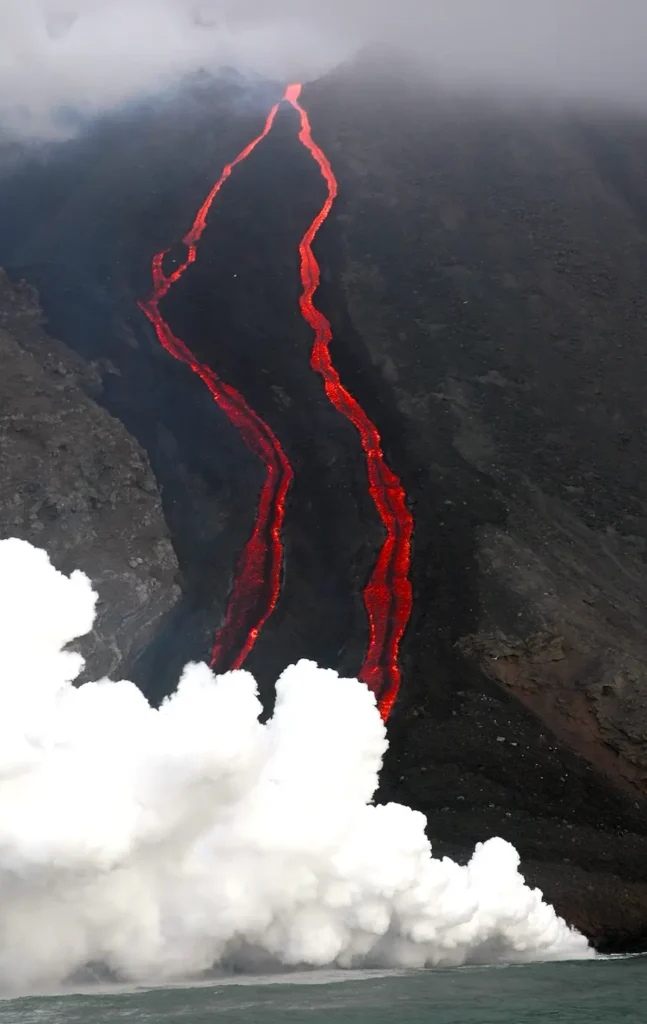
A lava delta at Stromboli forms when active, lava flow from the volcano’s summitor and travel down the steep slope of the Sciara del Fuoco a large depression and reach the sea.
1. Lava Entry into the Sea: when molten lava reaches the coastline, it encounters the significantly cooler seawater. This rapid contact triggers intense thermal shock. The lava cools almost instantaneously.
2. Fragmentation and Accumulation: as the lava enters the water, it does not simply form a solid slab, these fragments accumulate on the seabed, filling in the underwater topography. This creates an underwater platform that acts as a foundation.
3. Building Land: once this subaqueous foundation has built up enough material, the subsequent sub-aerial lava flows can move further offshore. The delta begins to “prograde” extending the island’s coastline into the sea.
4. Characteristics of the Stromboli Delta
- Short-lived Nature: The Sciara del Fuoco is a very steep, unstable slope, and the delta material struggles to find a stable place on the deep.
- Instability and Hazards: These deltas are inherently unstable. They can be prone to sudden collapses, which may trigger small steam explosions.
- Dynamic Evolution: Depending on the effusion rate of the eruption, a delta can grow significantly in a matter of days before being eroded by wave action.
The 2002 collapse at Stromboli
The event was triggered by an effusive eruption that began on December 28, 2002. Over the following two days, constant lava flows descended the Sciara del Fuoco.
On December 30, this instability resulted in two massive, distinct landslides:
The First Landslide: This initial collapse was primarily submarine, occurring below sea level. It detached a large volume of loose volcanic material from the underwater slope.
The Second Landslide: This was a larger, mostly subaerial landslide. A massive portion of the volcanic flank (containing roughly 11 million cubic meters of material) gave way and plunged directly into the sea.
Why it Caused a Tsunami
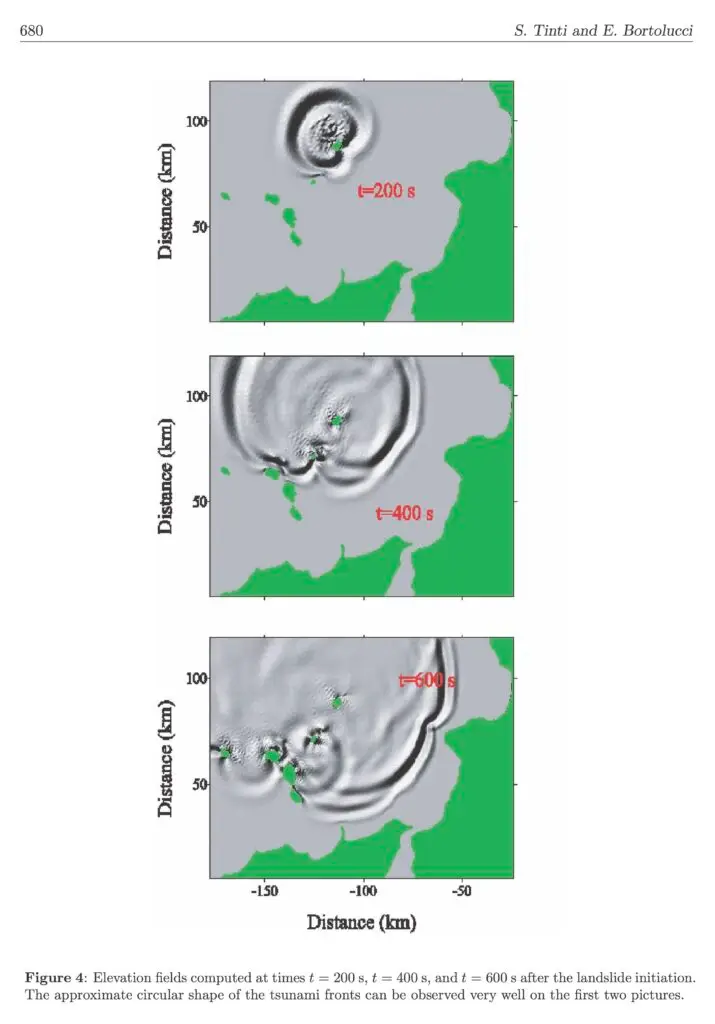
By mass displacement. When such a massive volume of rock and debris enters the ocean at high speed violently displacing the water column.
Impulse Waves: This rapid displacement created powerful waves.
Impact: Because the landslide occurred directly into the sea, the waves formed immediately, causing significant flooding and structural damage along the coast of Stromboli and reaching neighboring islands like Panarea, as well as the coasts of Sicily, Calabria and Campania
Significance: The event was a “wake-up call” for volcanologists. It highlighted that even when a volcano is not experiencing a violent, explosive eruption, the presence of an effusive lava flow can destabilize a steep, unconsolidated flank.
Bathymetric data acquisition
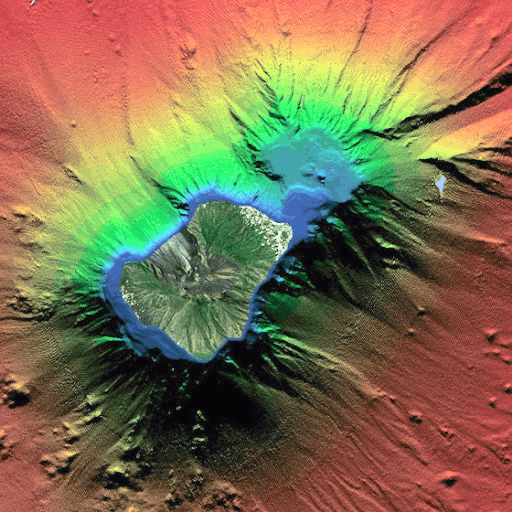
Development of thematic digital cartography in order to identify the deposit areas of detrital materials produced by lava and rocks as well the evaluation of accumulation volumes beneath the sciara, from cost line down to a depth of approximately 400 meters below sea level, in order to assess potential instability and tsunami risks associated with collapse phenomena.
Mission will be carried out in coordination with:
INGV – Istituto Nazionale di Geofisica e Vulcanologia – Aeolian Islands hazard monitoring program;
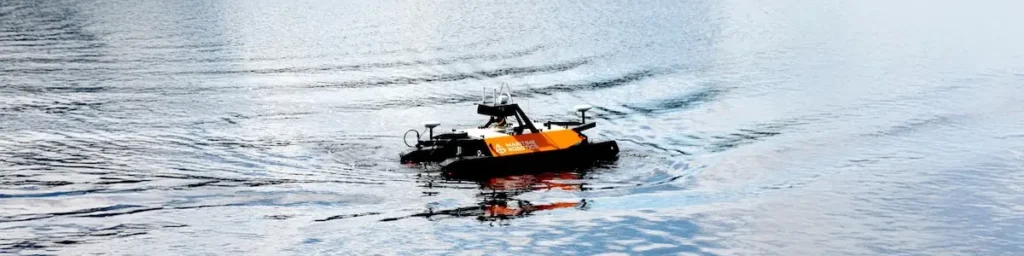
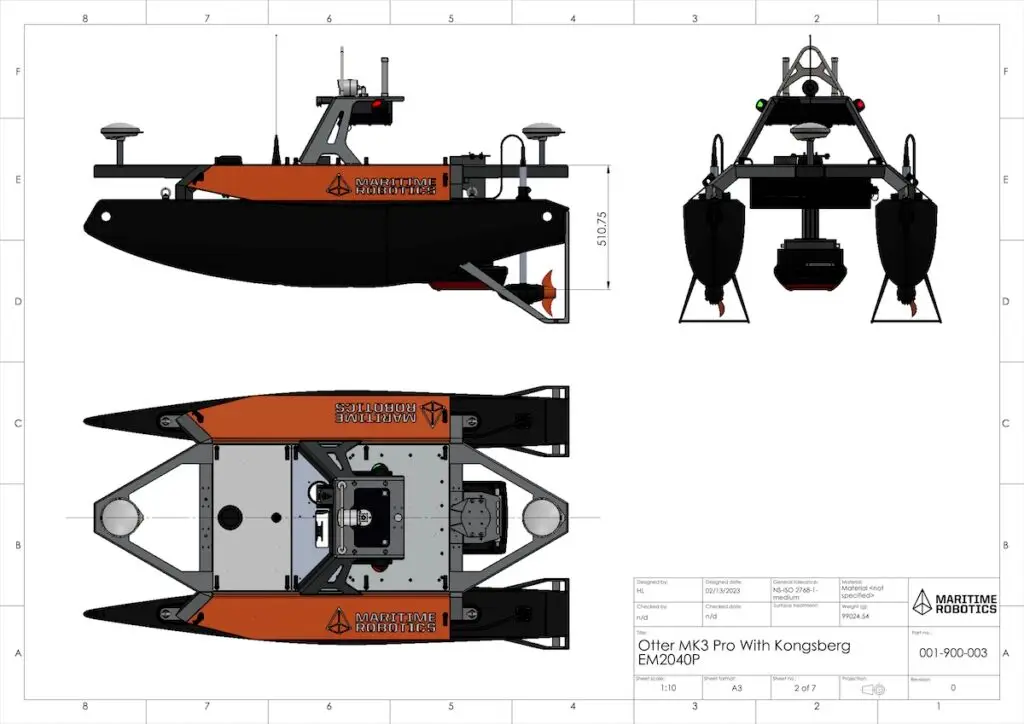
Task: naval support operations of USV (Unmanned Surface Vehicle) carrying MBES (Multi Beam Echo Sounder) including vehicle launching and hauling, remote control and telemetry for data reception